
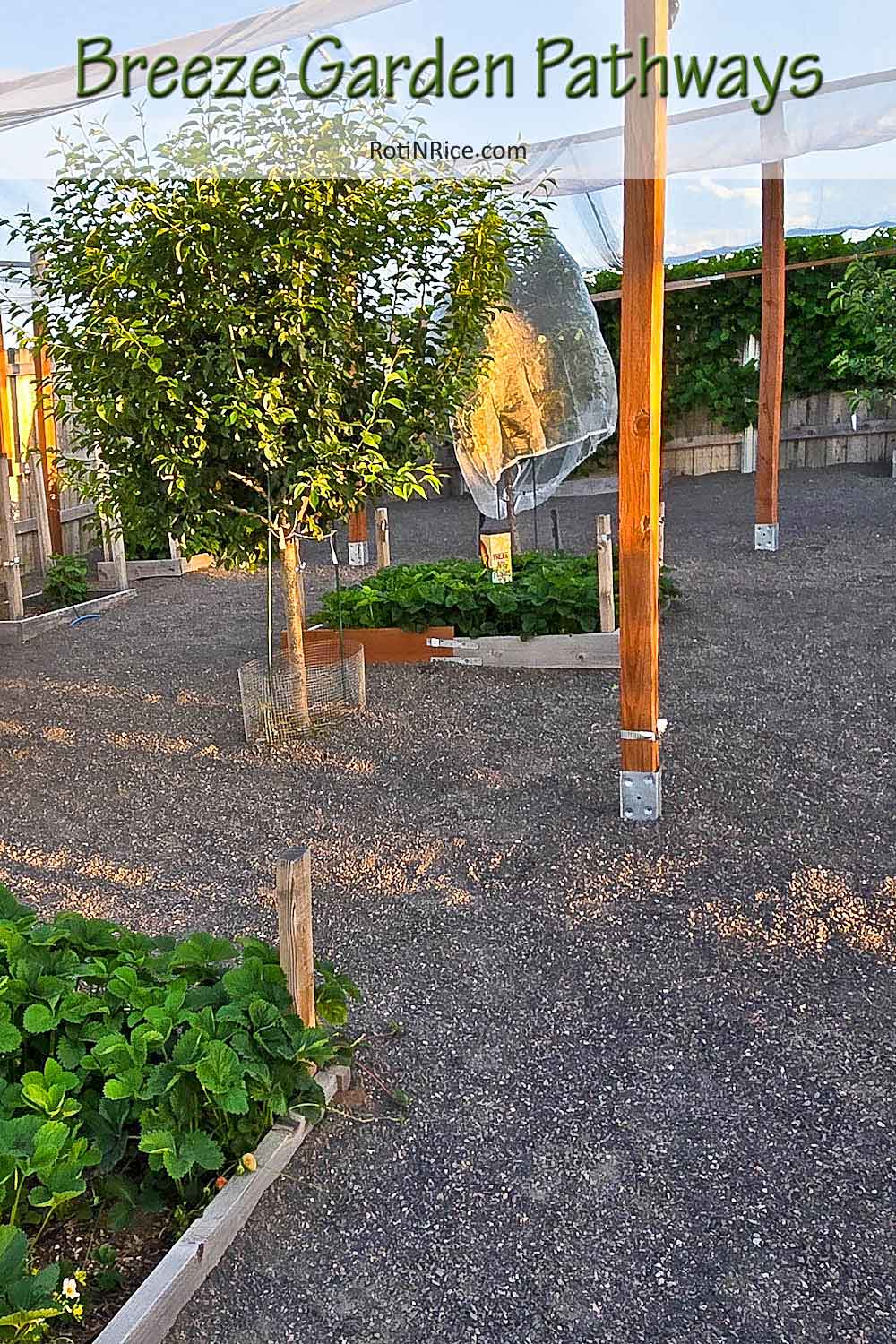
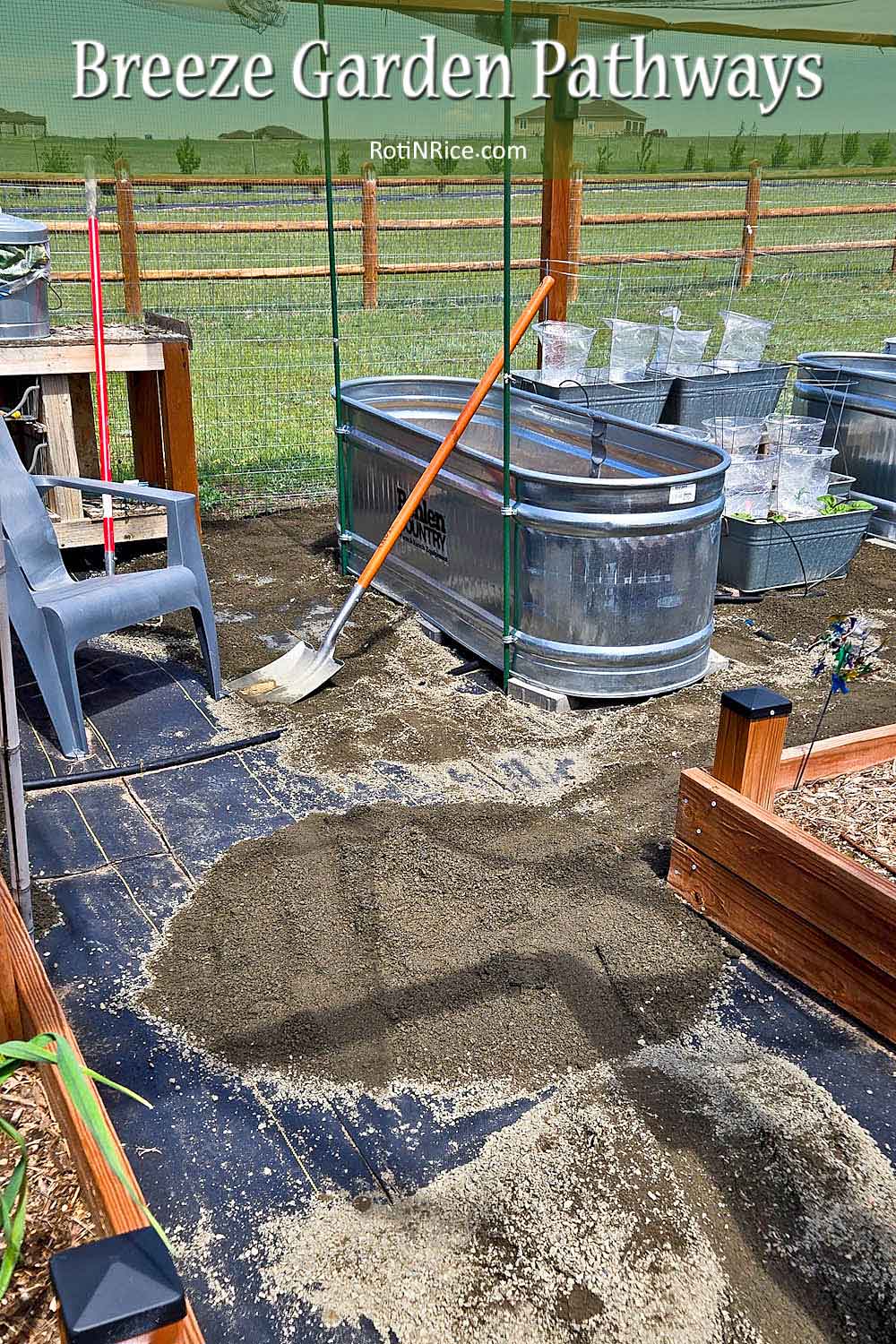
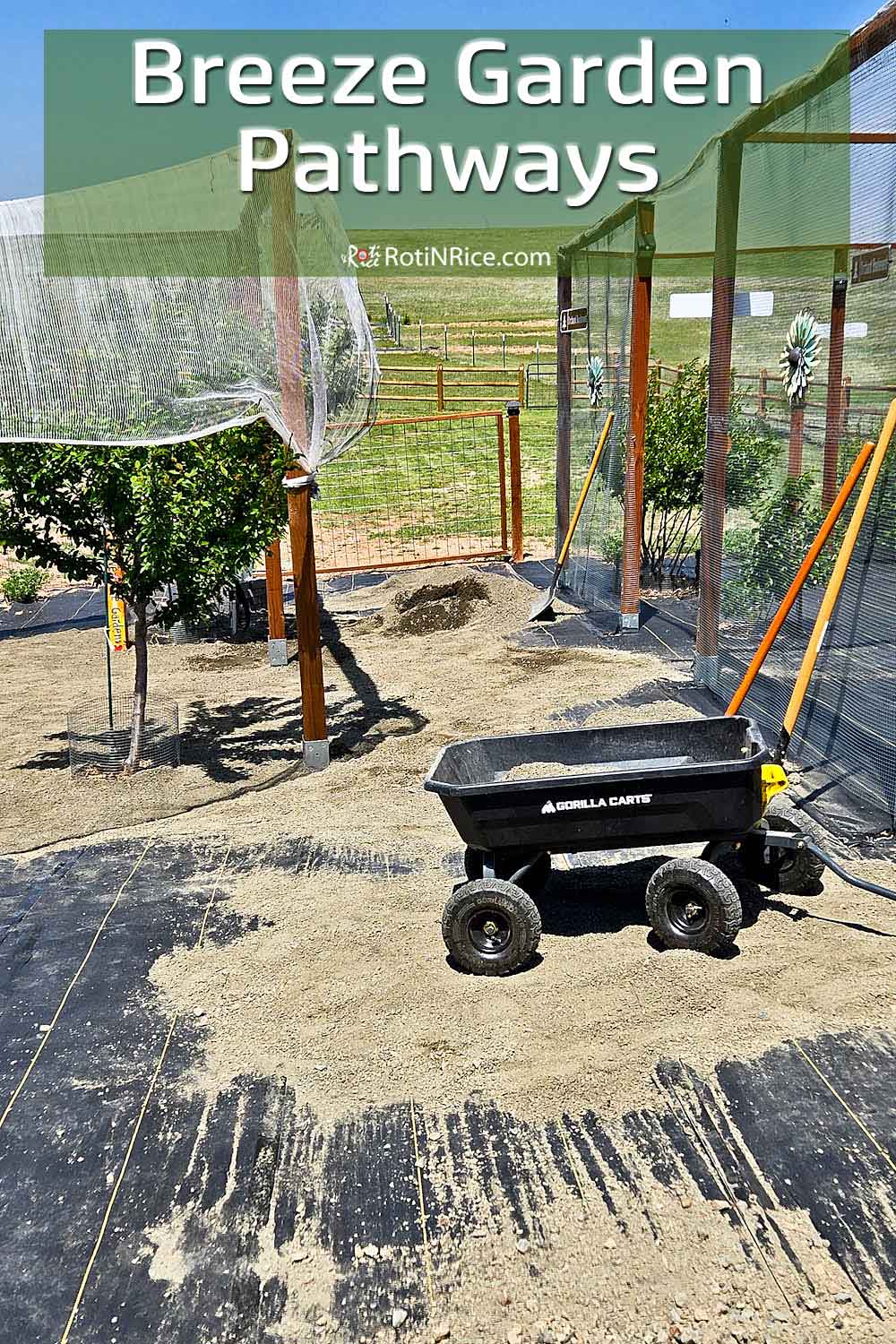
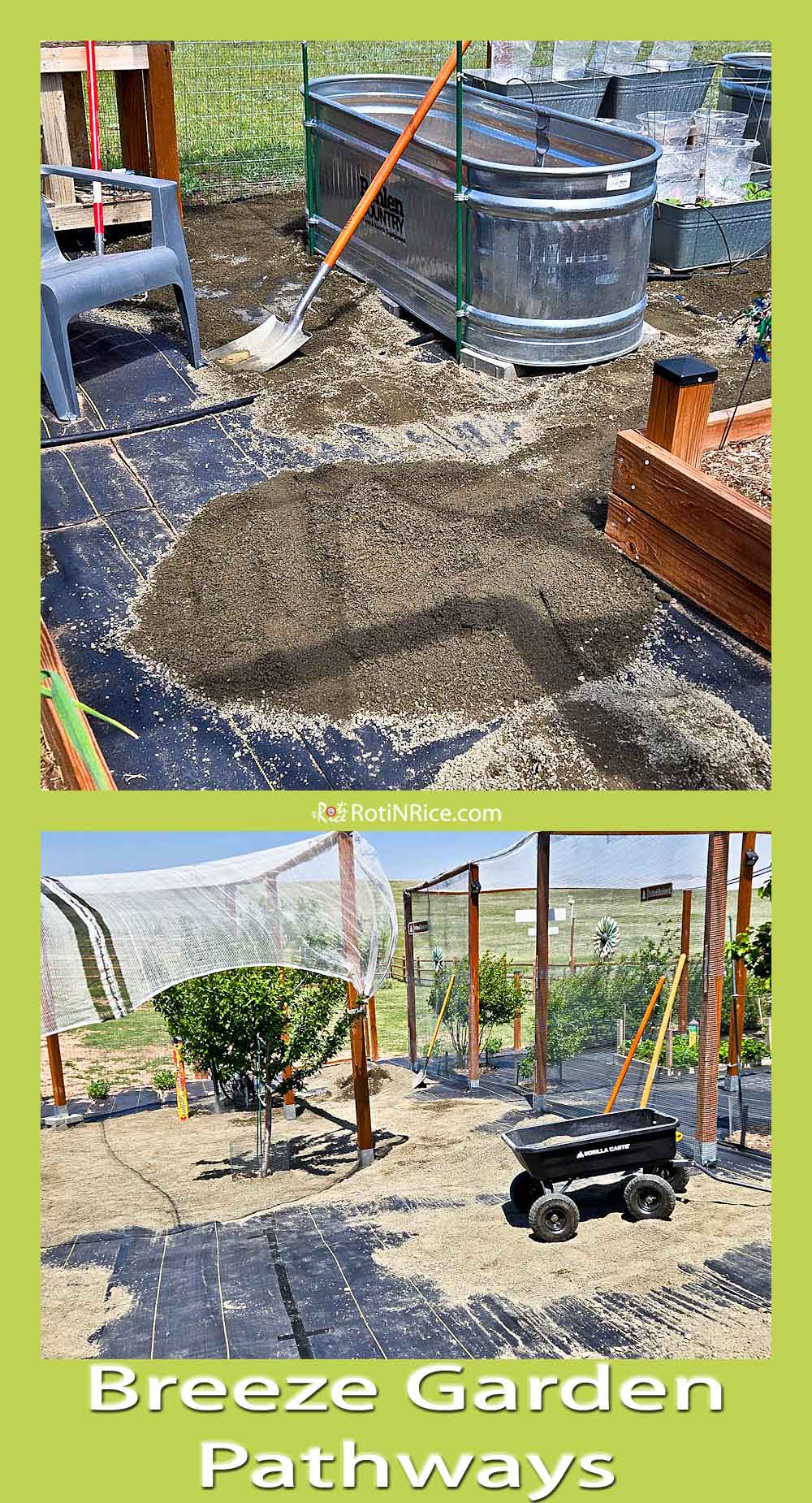
Spreading crushed granite on landscape fabric for Breeze Garden Pathways to improve walking surface and to prevent wind and water erosion.
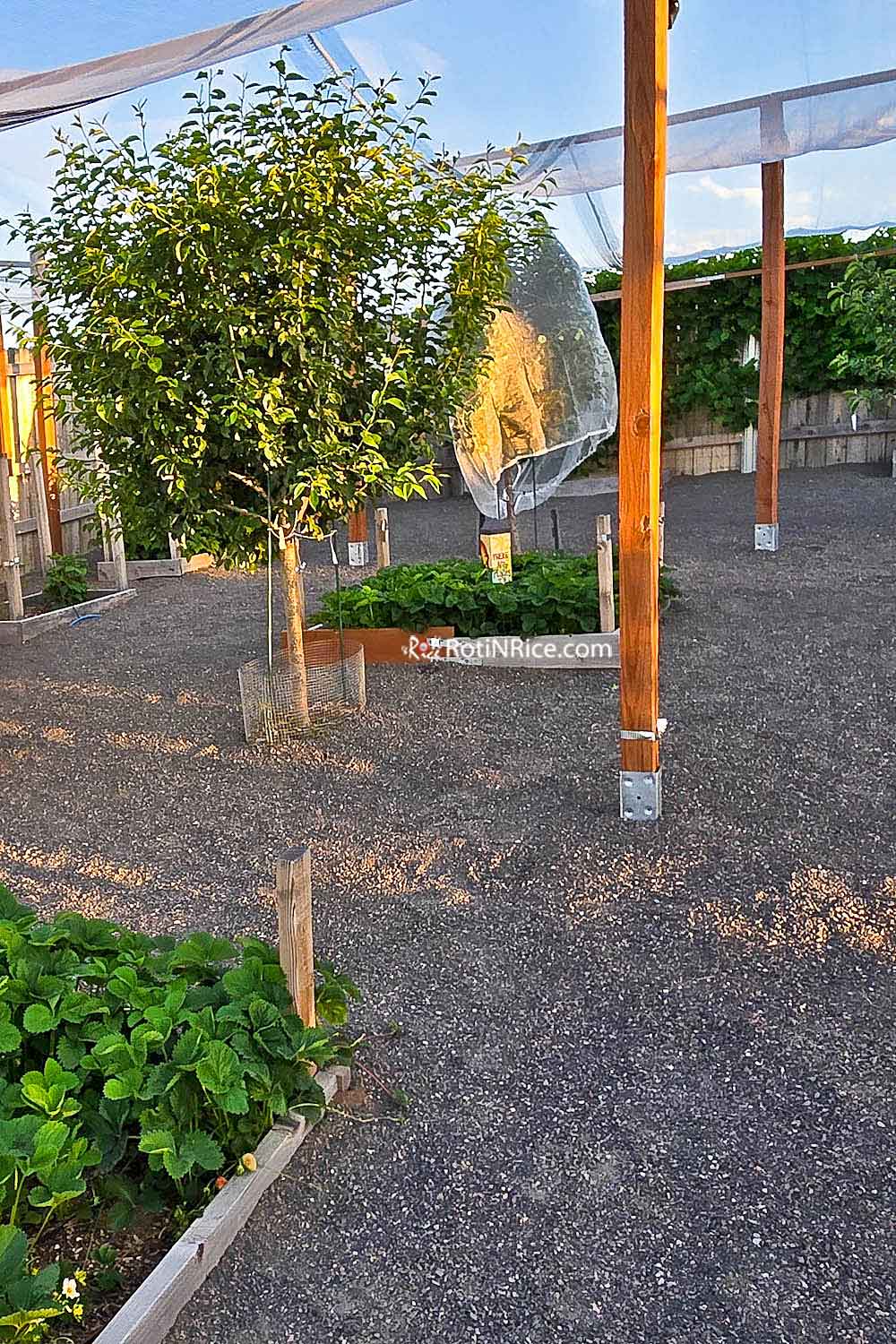
Growing vegetables and fruit trees in the High Plains of Wyoming is definitely not for the faint-of-heart. In our previous two posts entitled Raised Bed Garden Extension and Orchard in the High Plains, we ended there with references to laying down landscape fabric to act as weed block and also to keep the paths clear and clean. However, over the next two years, we saw the tidy layers of fabric ravaged by the winds and storms.
The spring and summer rainstorms brought sudden water flows that cut deep furrows in the bare soil beneath the fabric. These hidden trenches were hazardous to walk on. One could easily miss a step and sprain a foot or ankle. Furthermore, the high winds ripped out the edges of the fabric and tore the seams in places. Lastly, the black fabric felt hot in the summer and it was not pleasant to walk on.


Crushed Granite/Breeze Garden Pathways
In the summer of 2025, we decided to spread crushed granite, also called breeze, onto the landscape fabric in both the vegetable garden and orchard. The finely crushed rock material would
1. weigh down the landscape fabric from being blown by the wind,
2. provide a better surface for walking on, and
3. fill the voids created from the previous storm flows.
Breeze By The Ton
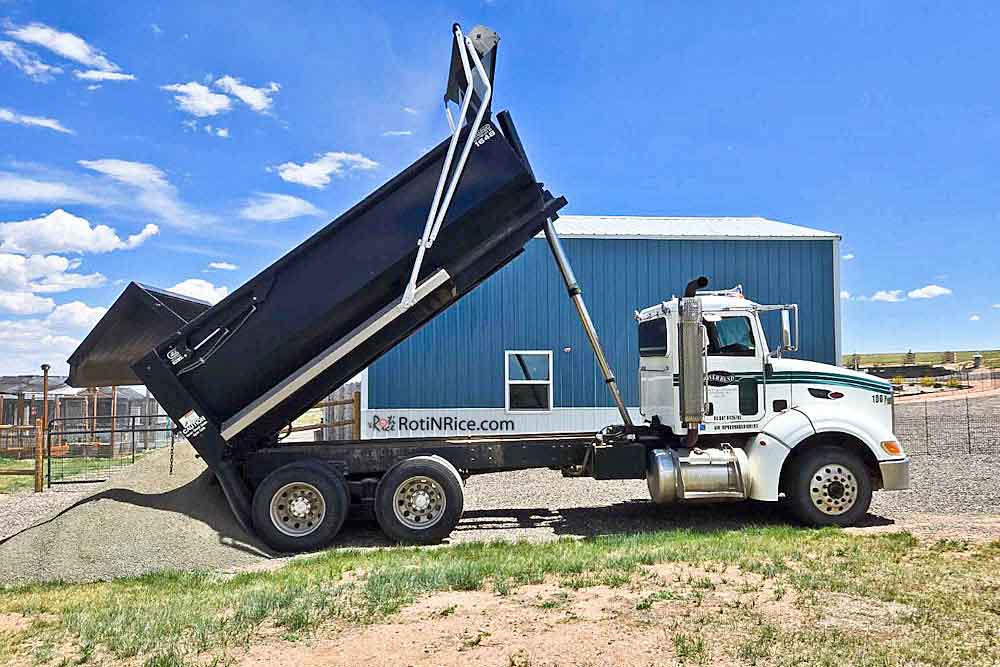
The vegetable garden and orchard are fairly large areas to cover. We had to order the breeze material by the ton from a landscape supplier. This was delivered by truck to our place and deposited in a small mountain just outside of our fenced perimeter. We had two separate loads delivered to us.
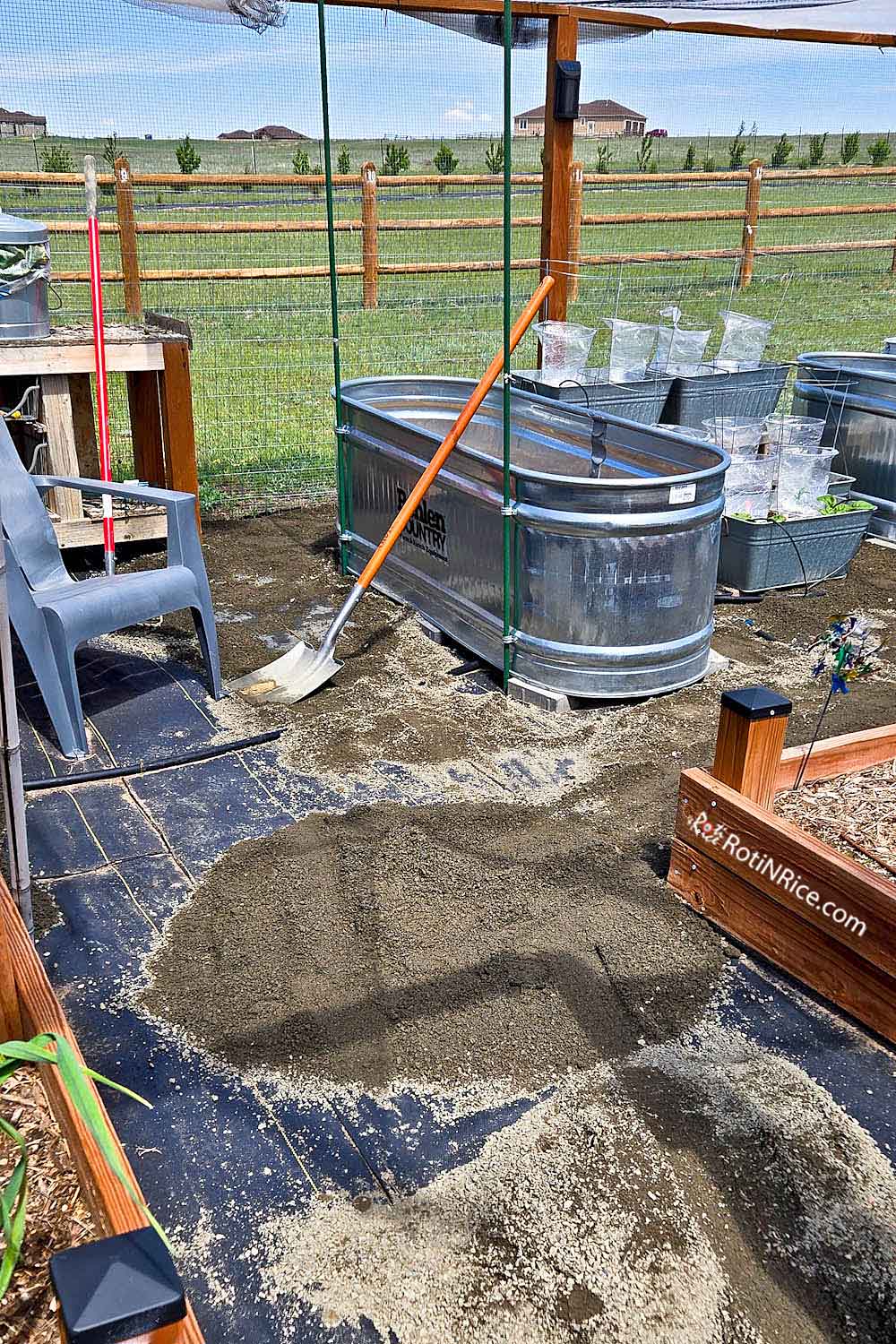
Breeze Garden Pathways in The Raised Bed Garden Extension
Since the rock pile was closer to the vegetable garden, we started spreading the breeze material there first. This area presented quite a challenge as it is enclosed on all sides by an internal fence with only a three-foot wide gate to allow human traffic. Through this chokepoint, we could only cart in about two cubic feet of rock at one time. It was a long and arduous effort to get enough rock to cover the entire extended raised bed area surrounding all 14 boxes. It took three full days of carting and shoveling to cover the area.
Breeze Garden Pathways in The Orchard
Next, we moved to spread the breeze in the orchard which was more than 100 feet away from the perimeter gate. In the post Orchard in the High Plains, we alluded to a wider gate that would allow tractor access into the orchard. This feature became an important factor in being able to transport large quantities of crushed granite to the work site. Rori-San and Ro-Jiro took turns driving the front-loader tractor to ferry several tons of rock into the orchard.
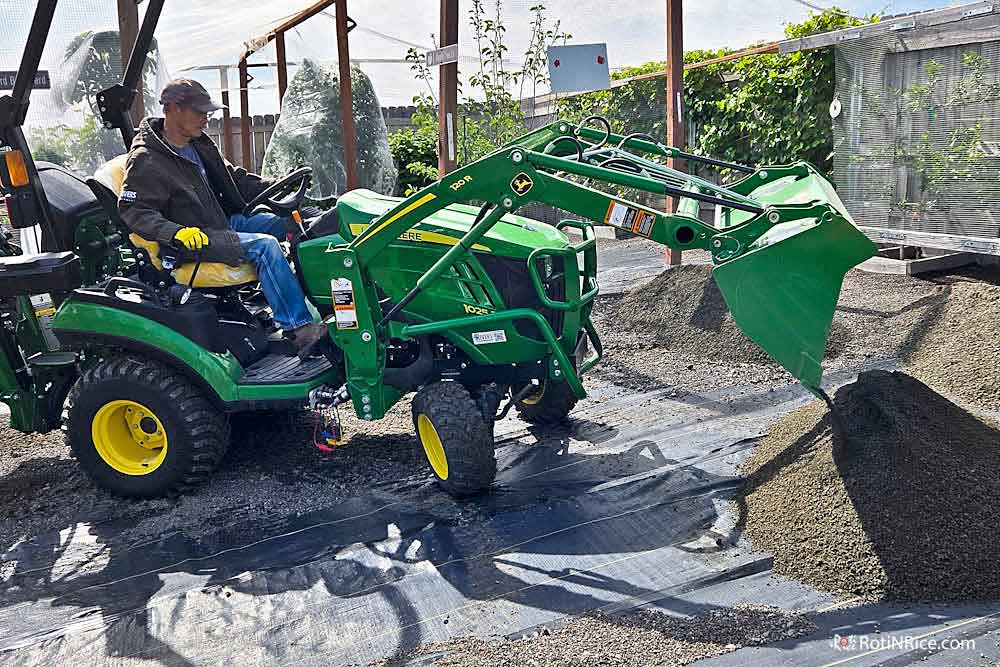
Spreading Breeze in The Orchard
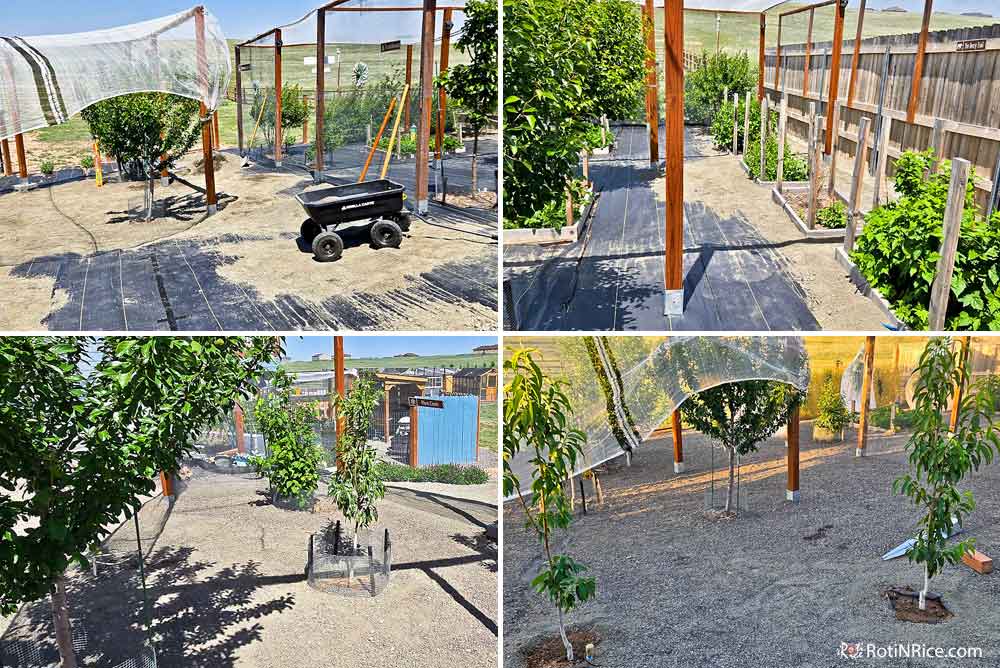
Spreading the breeze into every crook and cranny of the orchard still required much manual labor with cart and shovels. The work was hot and back-breaking for everyone, even with the help of the tractor. We took about seven days to finish but we were pleased with how both areas turned out. All in all, we used over 20 tons (40,000 lbs or 18,000 kg) of rocks to cover approximately 2800 sq ft in total.
Adding Peach Trees To Plum Circle
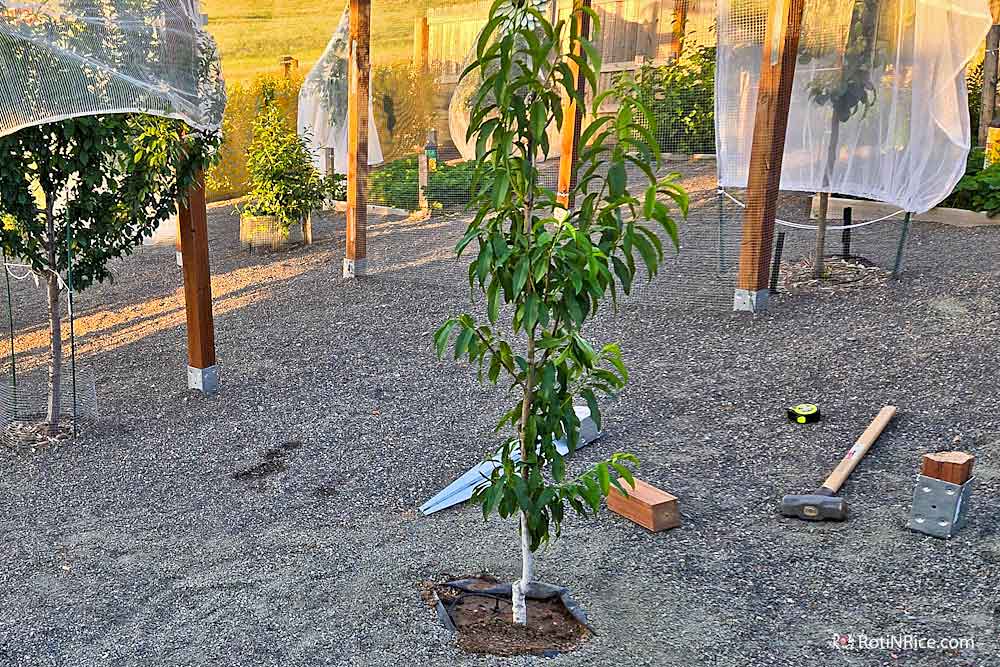
Since we were already working in the orchard, we decided to expand the area called the Plum Circle. We had three peach trees that we were looking to plant there. In order to do that, we needed to sink four more 4×4 posts into the ground. This extension improved the coverage of hail protection for the plum trees already in there. It also improved the aesthetics of that part of the orchard.


Leave a Reply