
Powering through our Garden Recovery After Hailstorms with plans for a more permanent hail protection structure in each of the gardens.
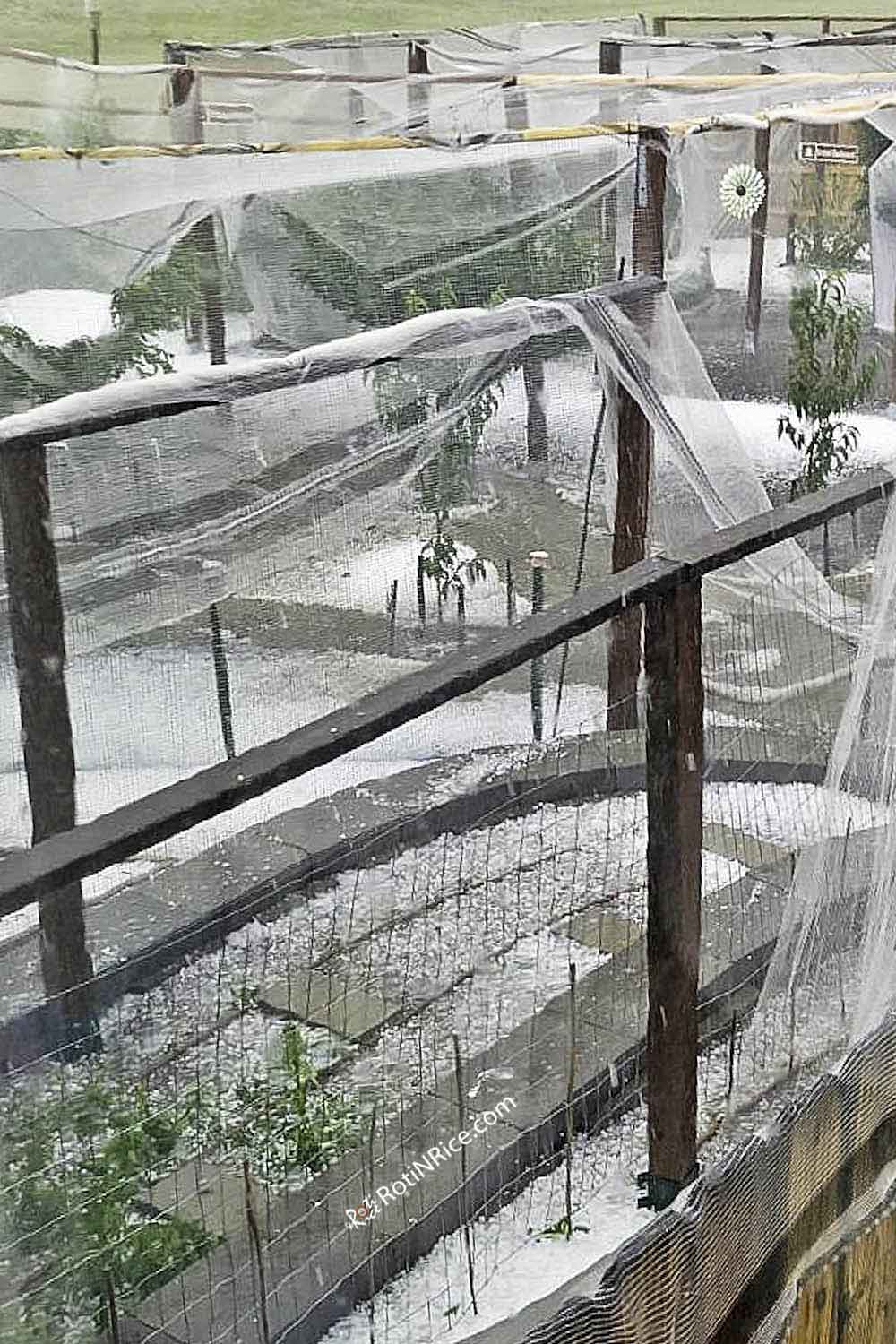
Gardening in the High Plains of Cheyenne, Wyoming is a very challenging endeavor. Late spring and summer storms come with high winds and hailstones ranging in size from small pea gravel to large tennis balls. These can wipe out the entire season’s plantings even before they have a chance to take root.
Hail Netting
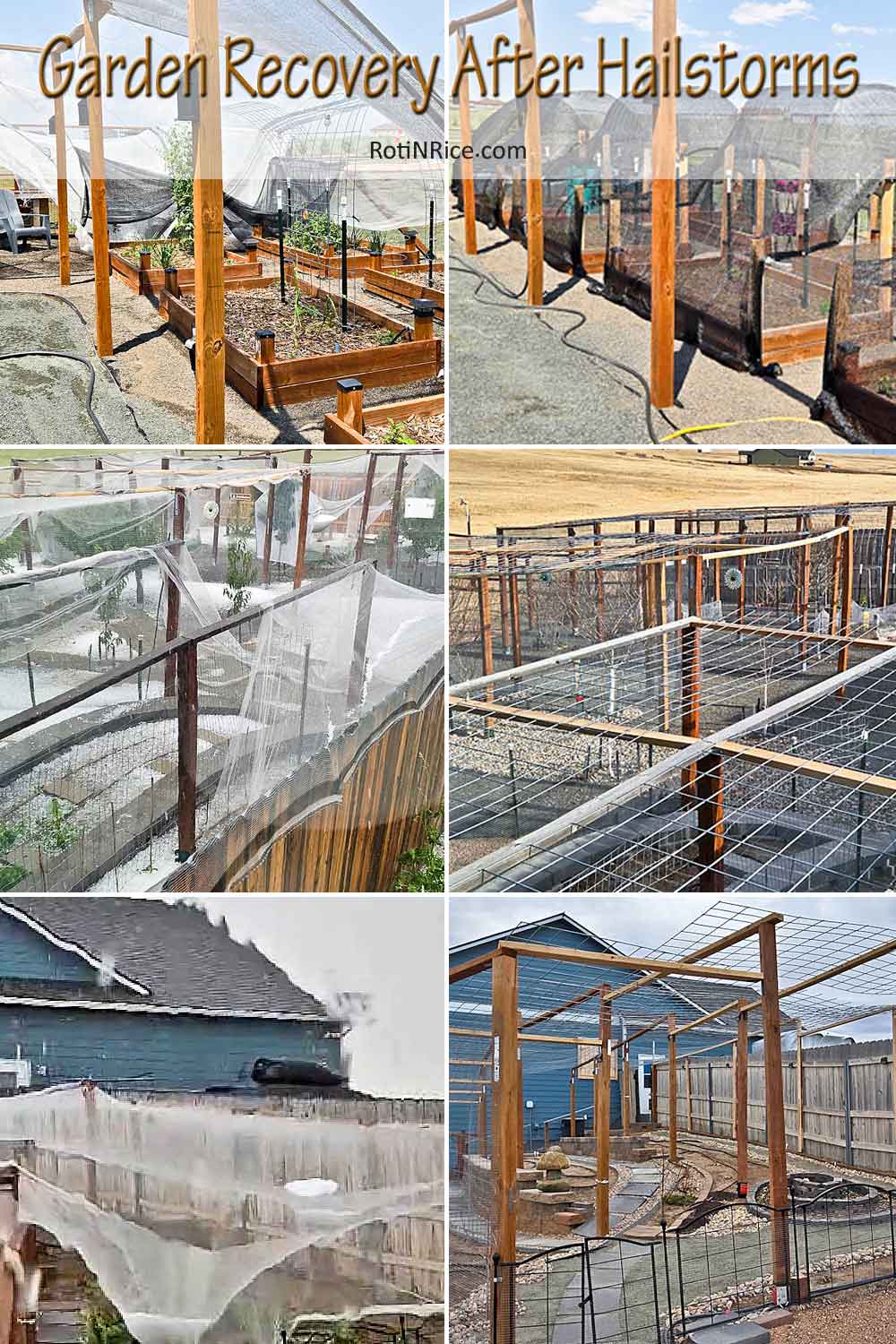
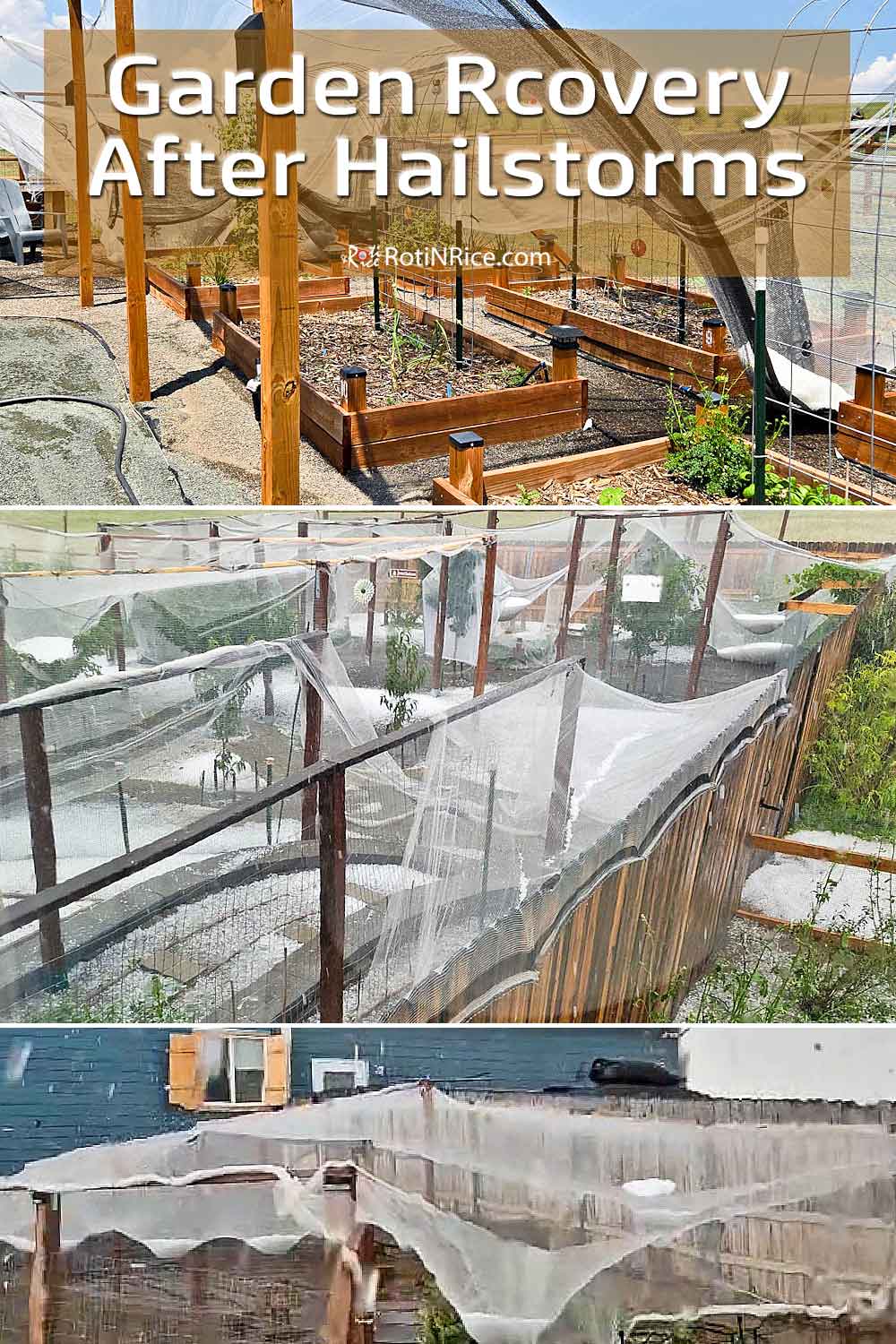
From previous years, we had installed wooden frames to hold hail cloth over our growing spaces. They were spread over large areas of the Raised Bed Garden, Orchard, Terraced Vegetable Garden, and West Terraced Garden. The hail cloth had been relatively successful in catching pea gravel and marble sized hail which protected the trees and plants beneath the wooden frames.
A Series of Strong Hailstorms
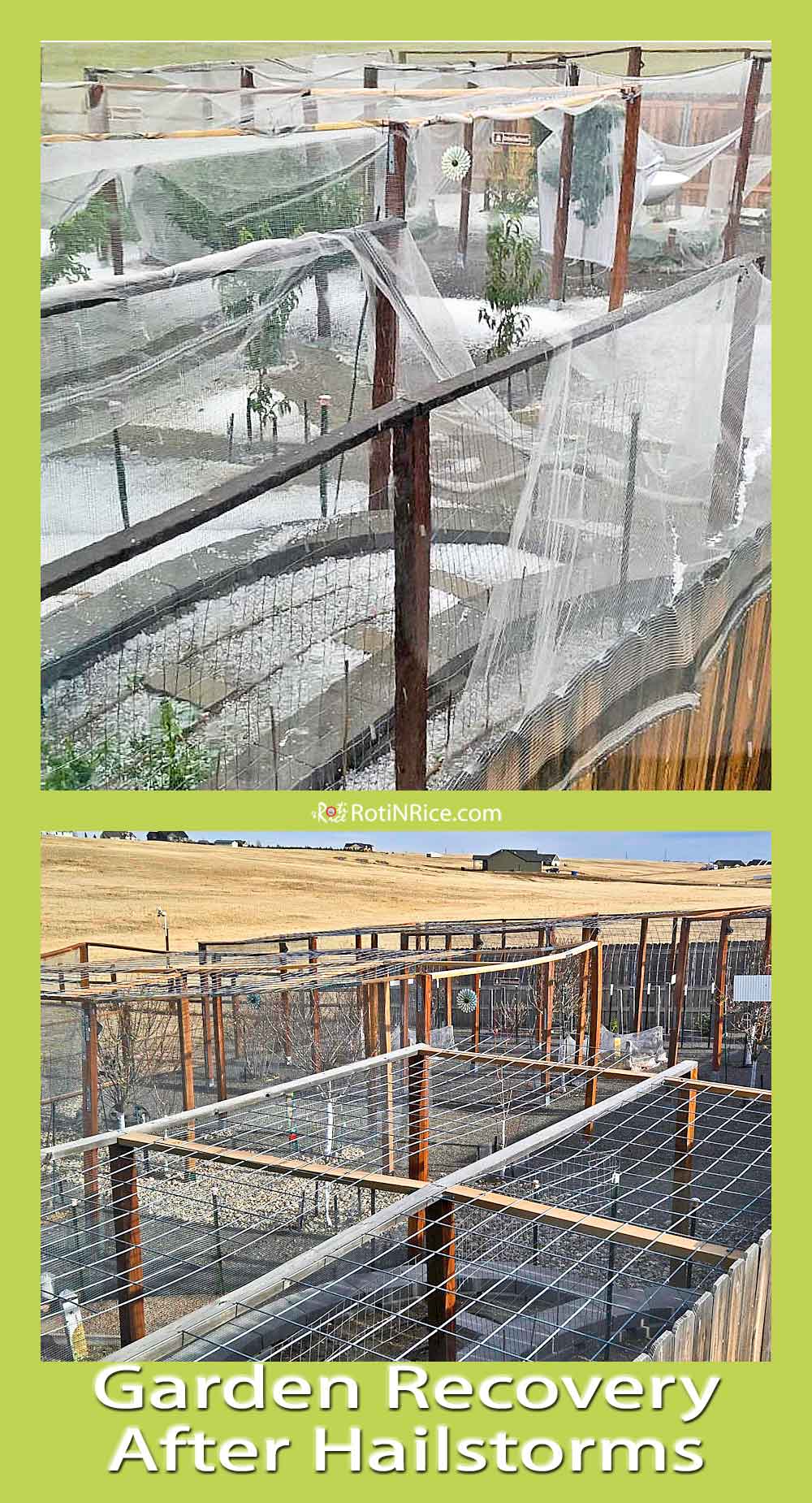
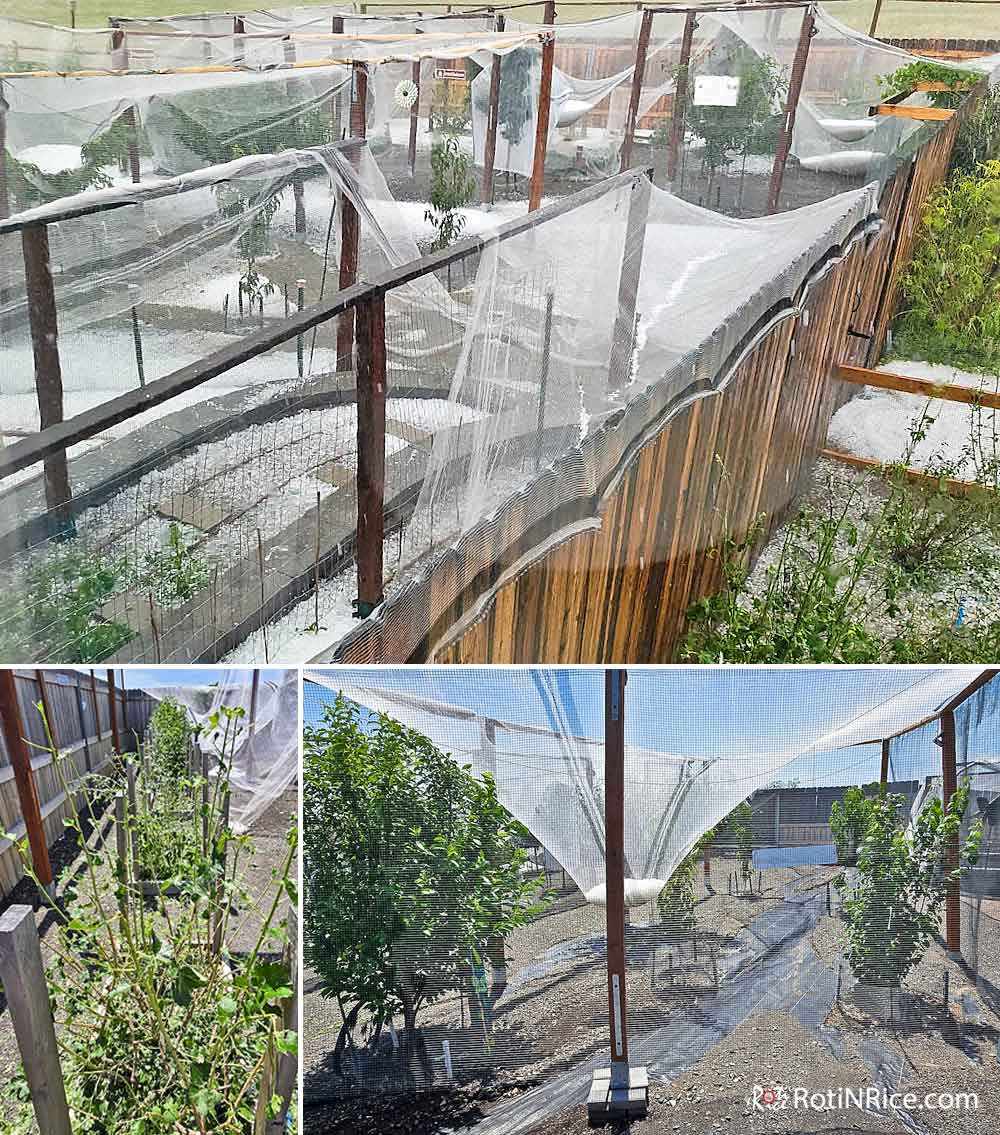
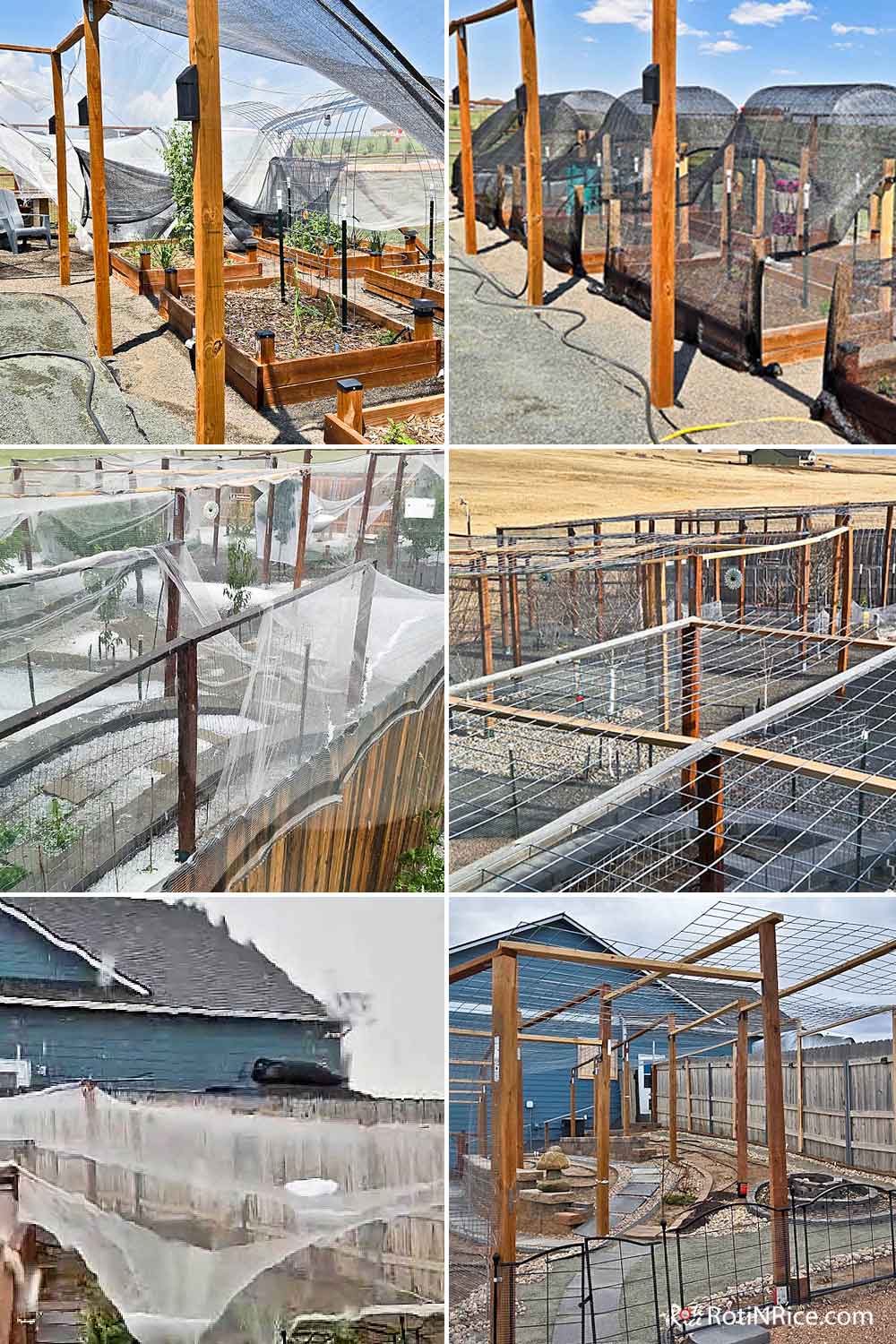
However, in the summer of 2025 we were struck by a series of unusually strong hailstorms. The storms happen in quick succession, about two weeks apart, from late June to early August. Hail fell in large quantities weighing down the hail cloth. The hailstones were so heavy that the nets tore and broke some of the supporting wooden frames.
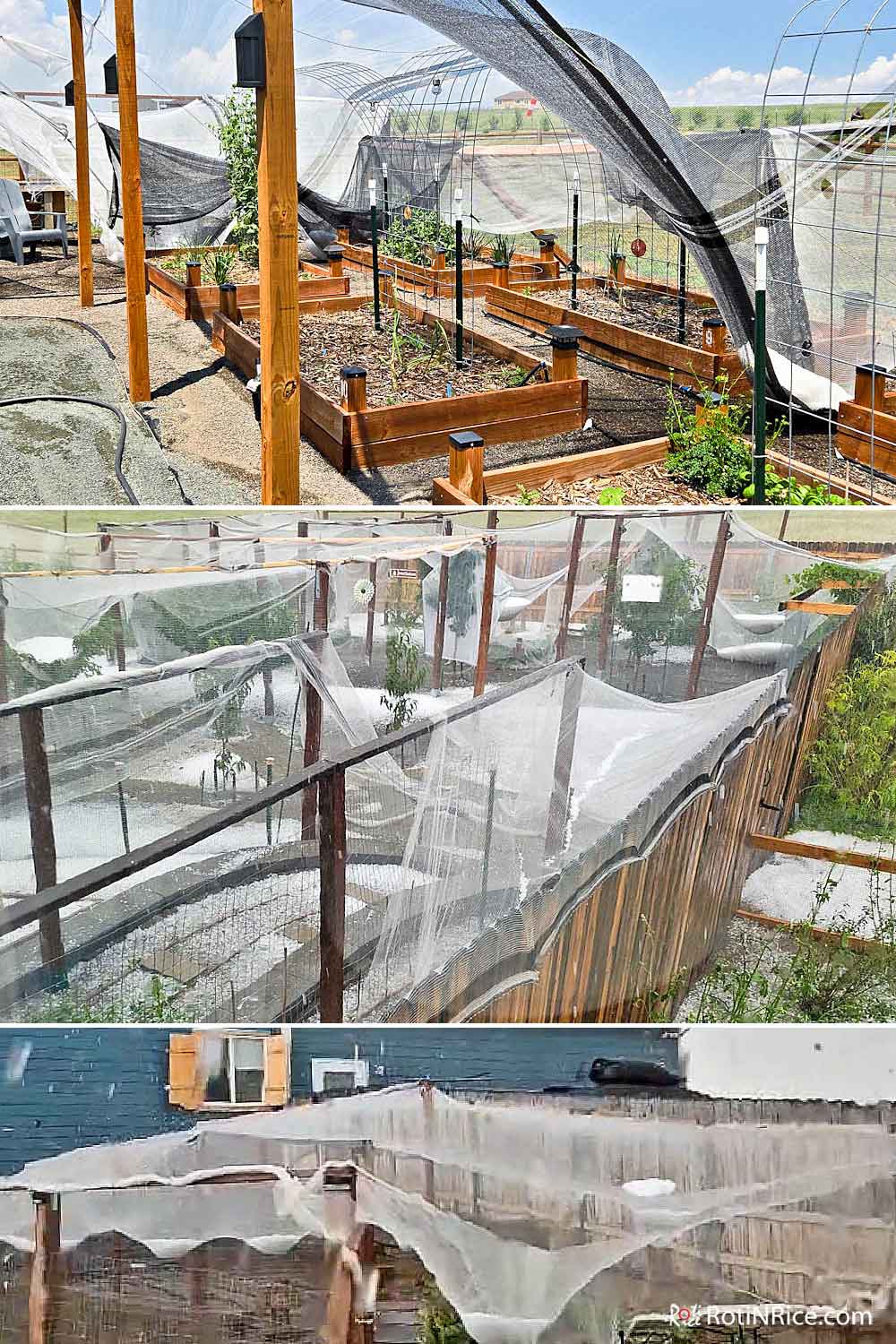
Through these broken gaps, more hail came through and destroyed the plants beneath.
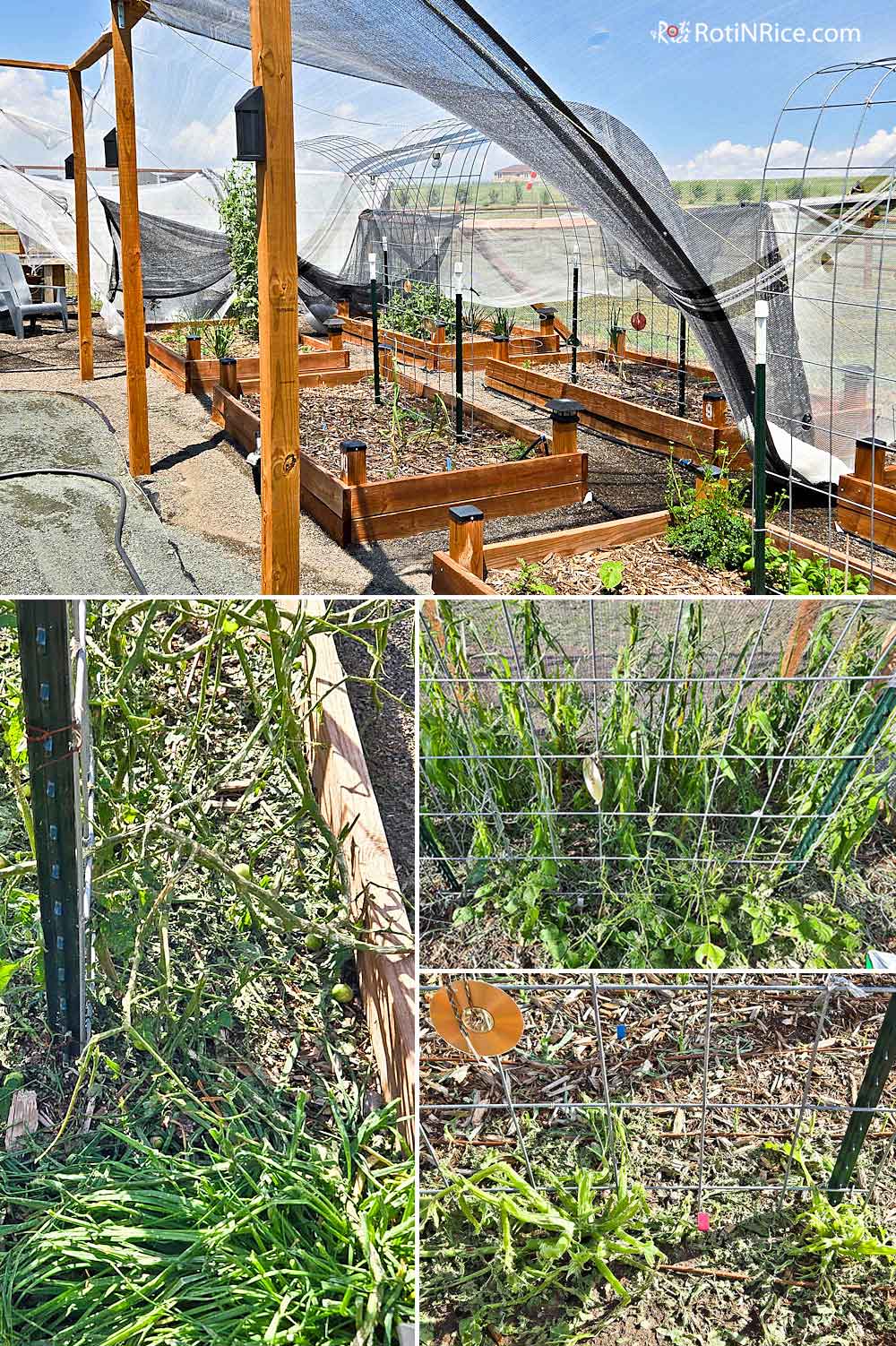
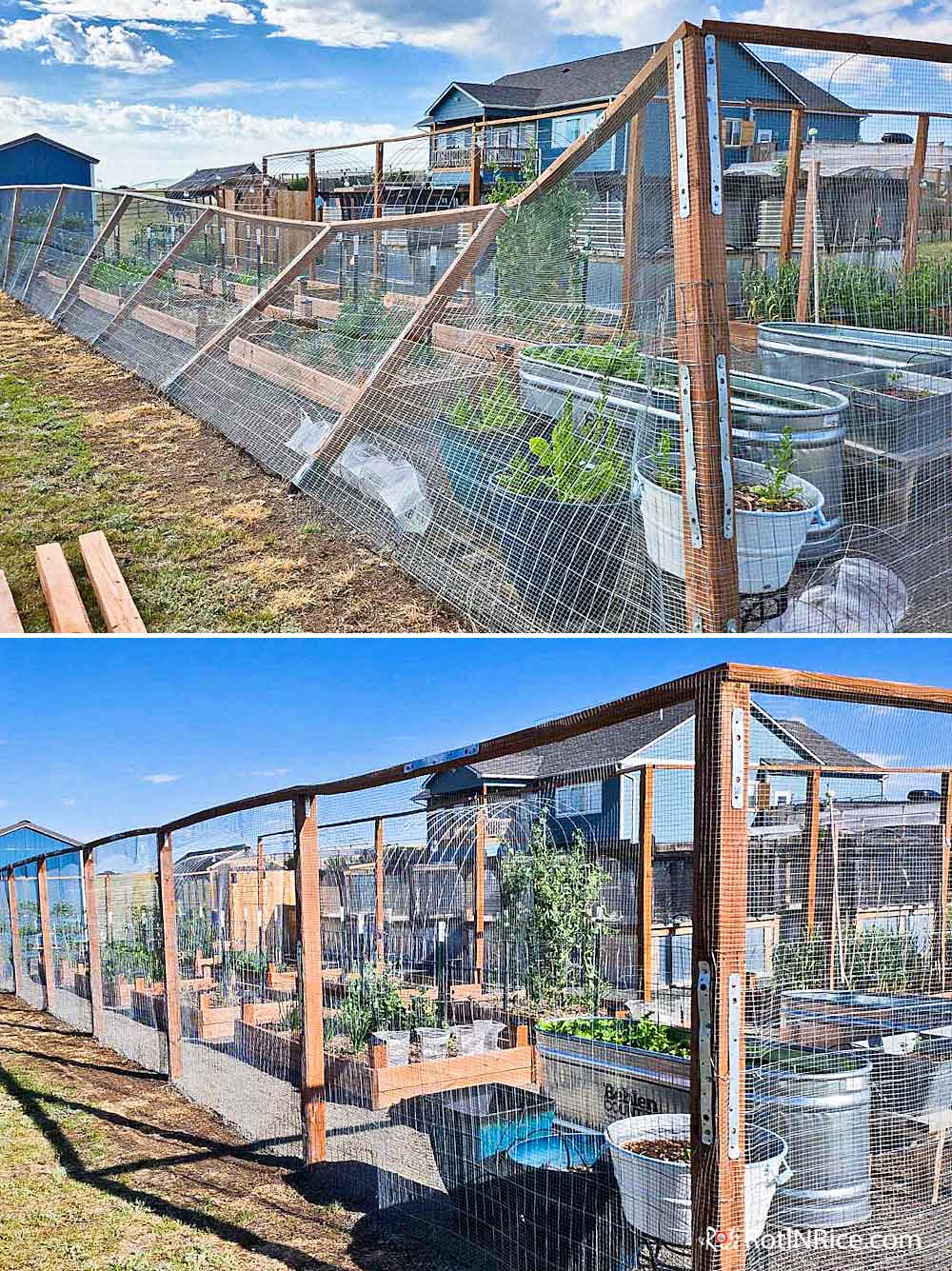
Collapsed Wooden Fence In The Raised Bed Garden
In one particularly violent storm, the north wind and load on the hail cloth brought down the entire section of the wooden fence in the Raised Bed Garden. The steel anchors snapped like matchsticks. The damage was very traumatizing and it set the whole growing season back by many weeks.
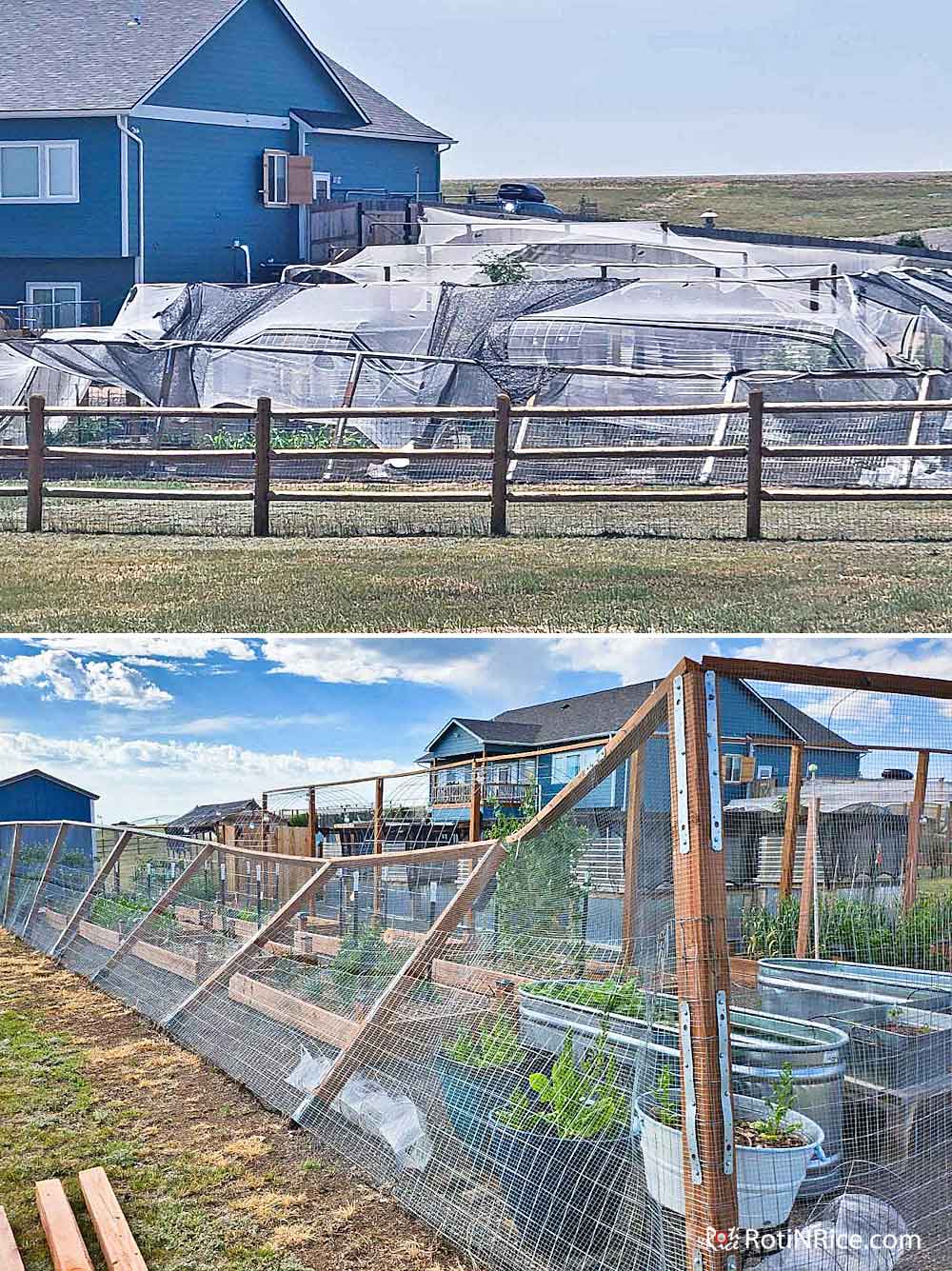
Damage In The Orchard
In the Orchard, the nets were so damaged that the hail shredded the row of berry bushes. The accumulated hailstones weighed down the netting to the point that some tree branches bent and broke beneath them. Furthermore, the sudden rush of storm water washed away many areas of breeze material that we had laid down just a few weeks prior as detailed in Breeze Garden Pathways.
More Damage In The Other Gardens
Our unprotected East Garden and row of elderberry bushes along the south fence (bordering the orchard) were denuded of leaves with many broken branches. Even our Japanese garden close to the house was not spared. The hail cloth tore and hailstones poured into the garden.
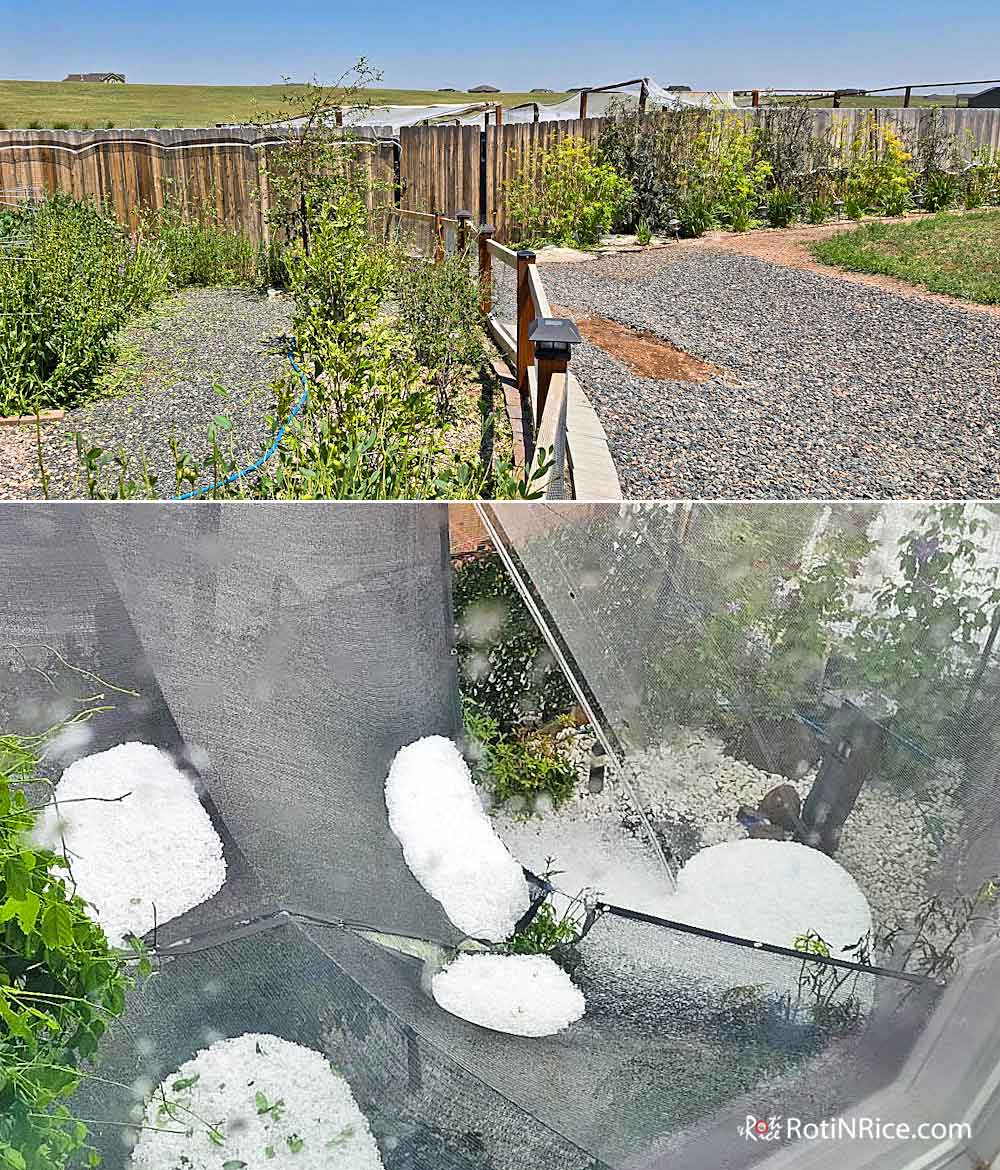
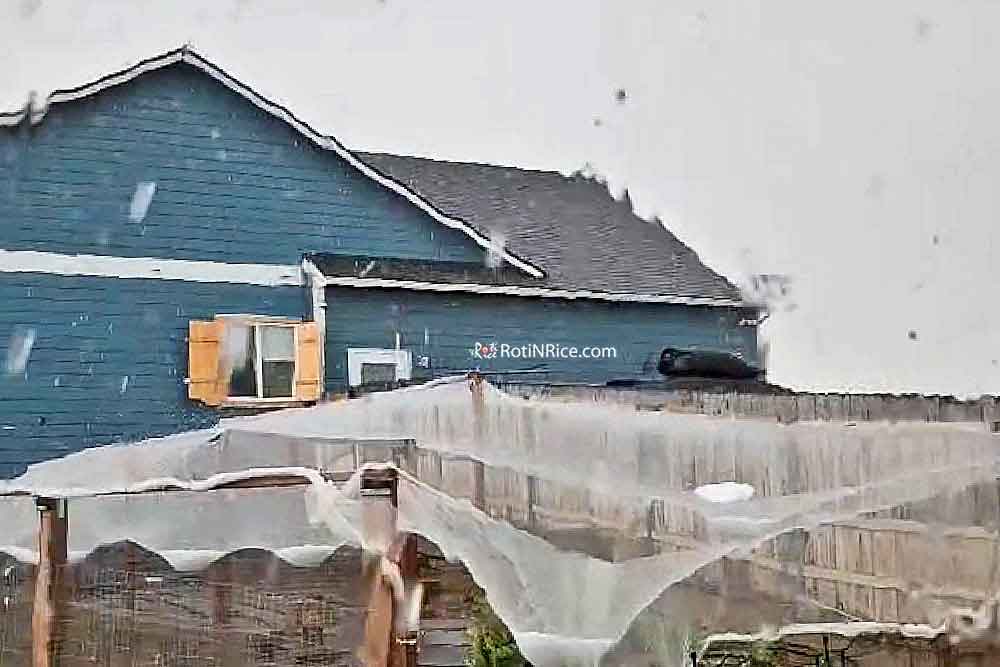
Similarly, the hail cloth over the West Terraced Garden strained under the weight of the hailstones but miraculously did not collapse.
Flooding Streams
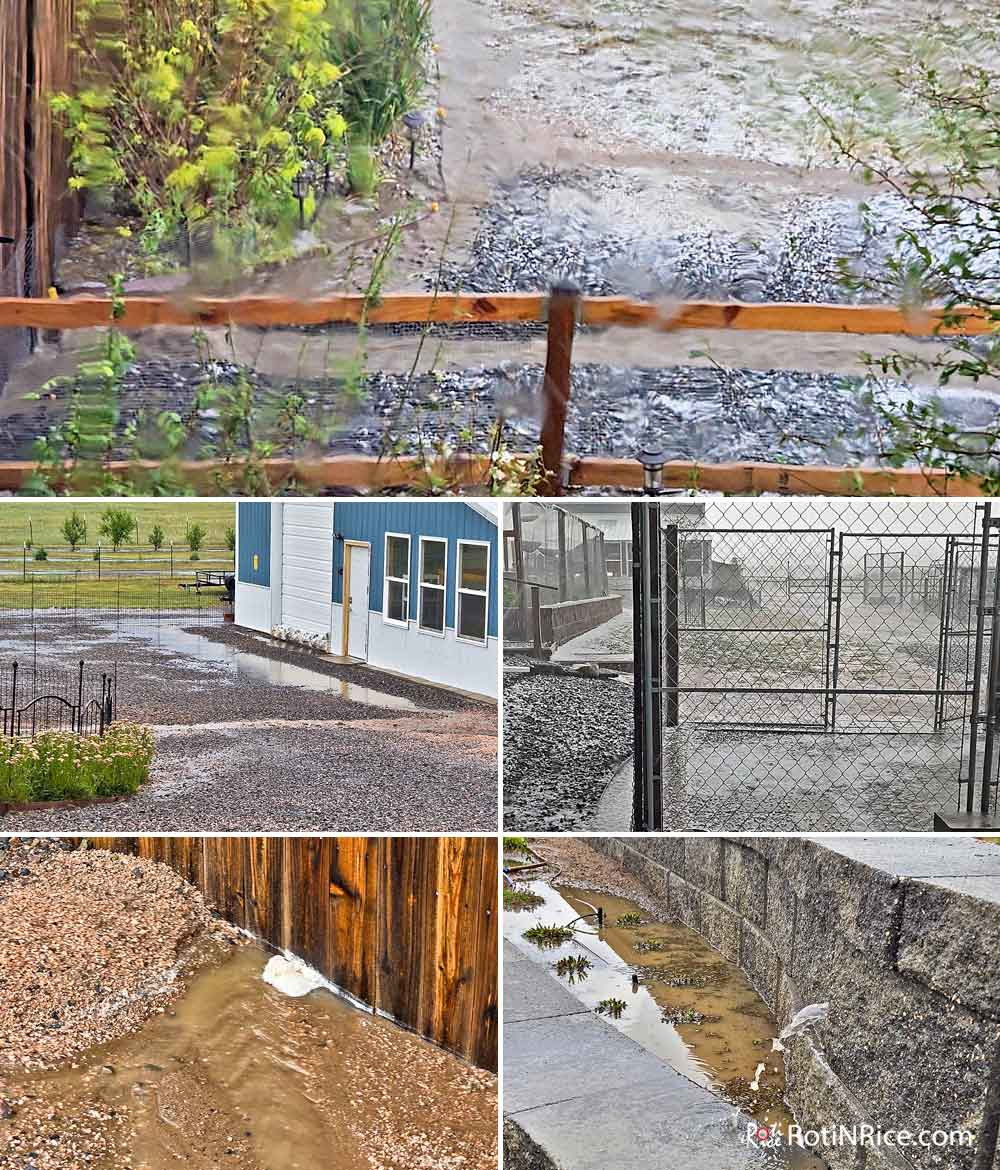
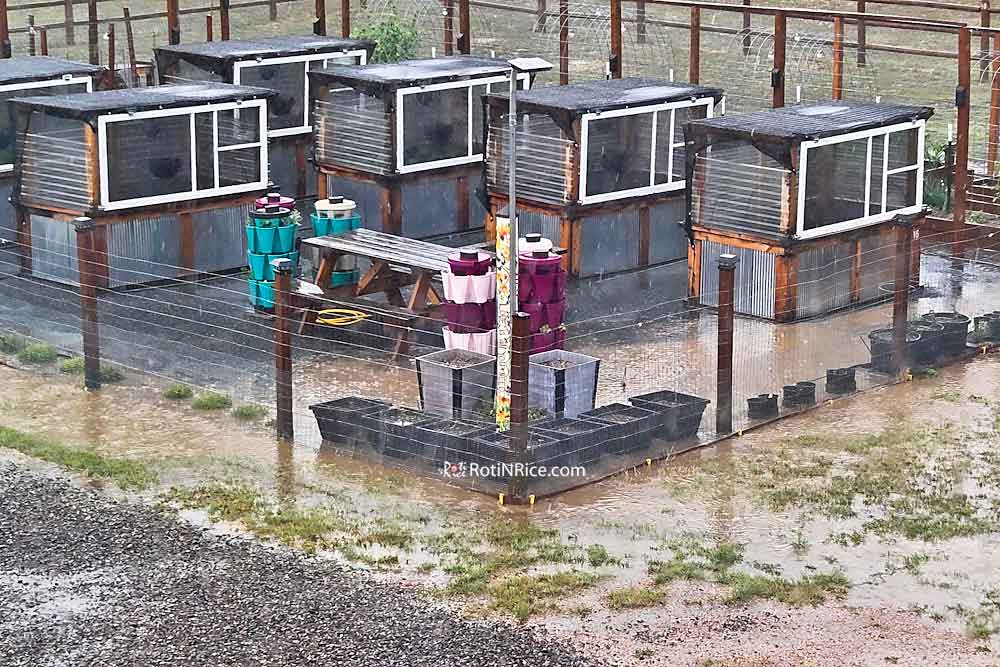
The storms unleashed flooding streams running through the entire yard. Smalls rivers ran through the orchard, around the barn, and through the raised bed garden. The rainwater even rushed through the retaining wall masonry. There was so much water everywhere which caused us to be very concerned about the structures around our gardens.
Rebuilding And Garden Recovery After Hailstorms
It was all very devastating and discouraging. There was just so much to clear and repair but the best way forward was to quickly rebuild.
Restoring The Northern Fence
The first structure to be restored was the northern fence of the Raised Bed Garden. We removed the wooden posts and dug out the broken steel anchors. They were replaced with new wooden posts sunk two feet into the ground held with concrete.
Protection Tents
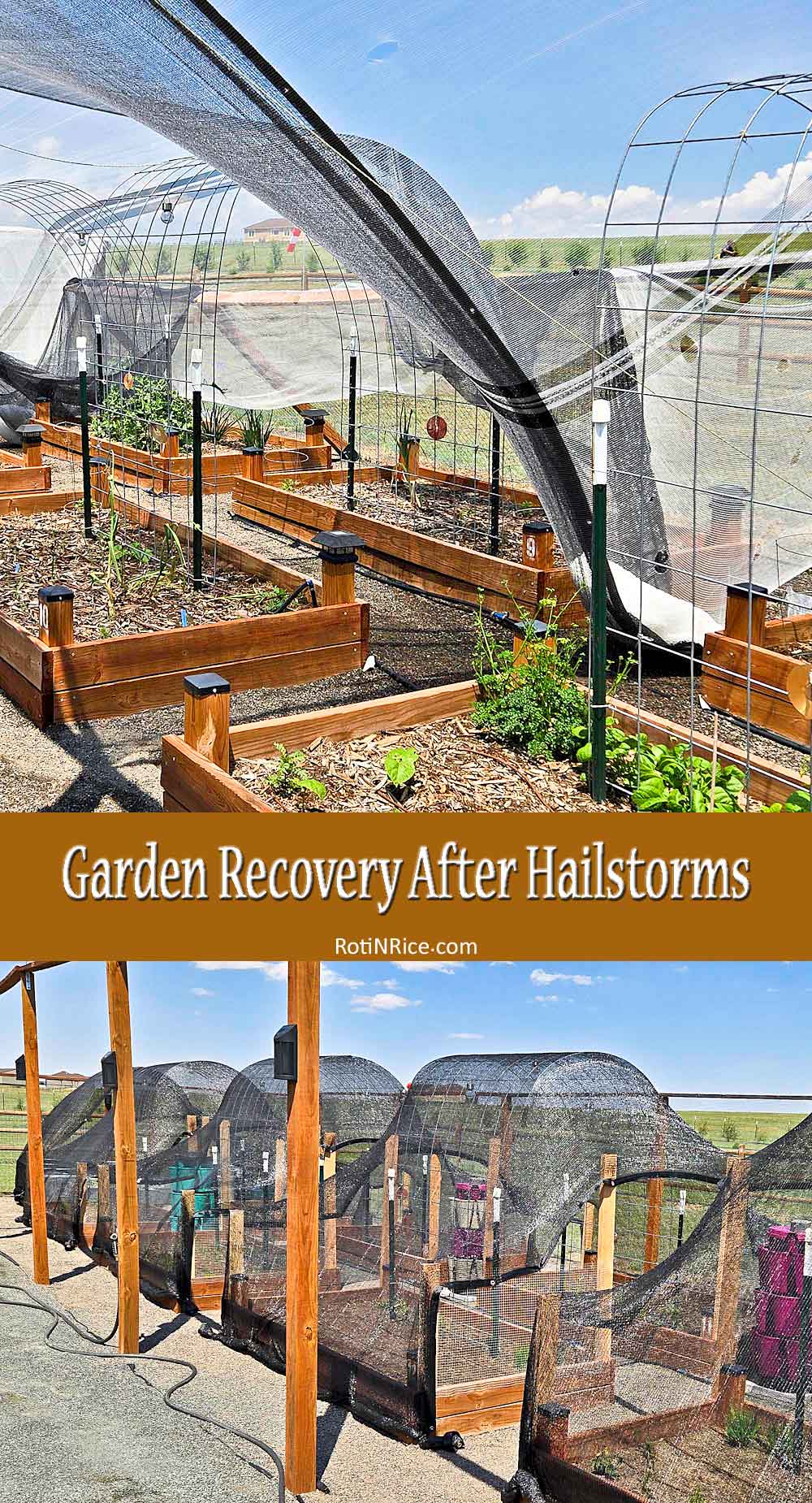
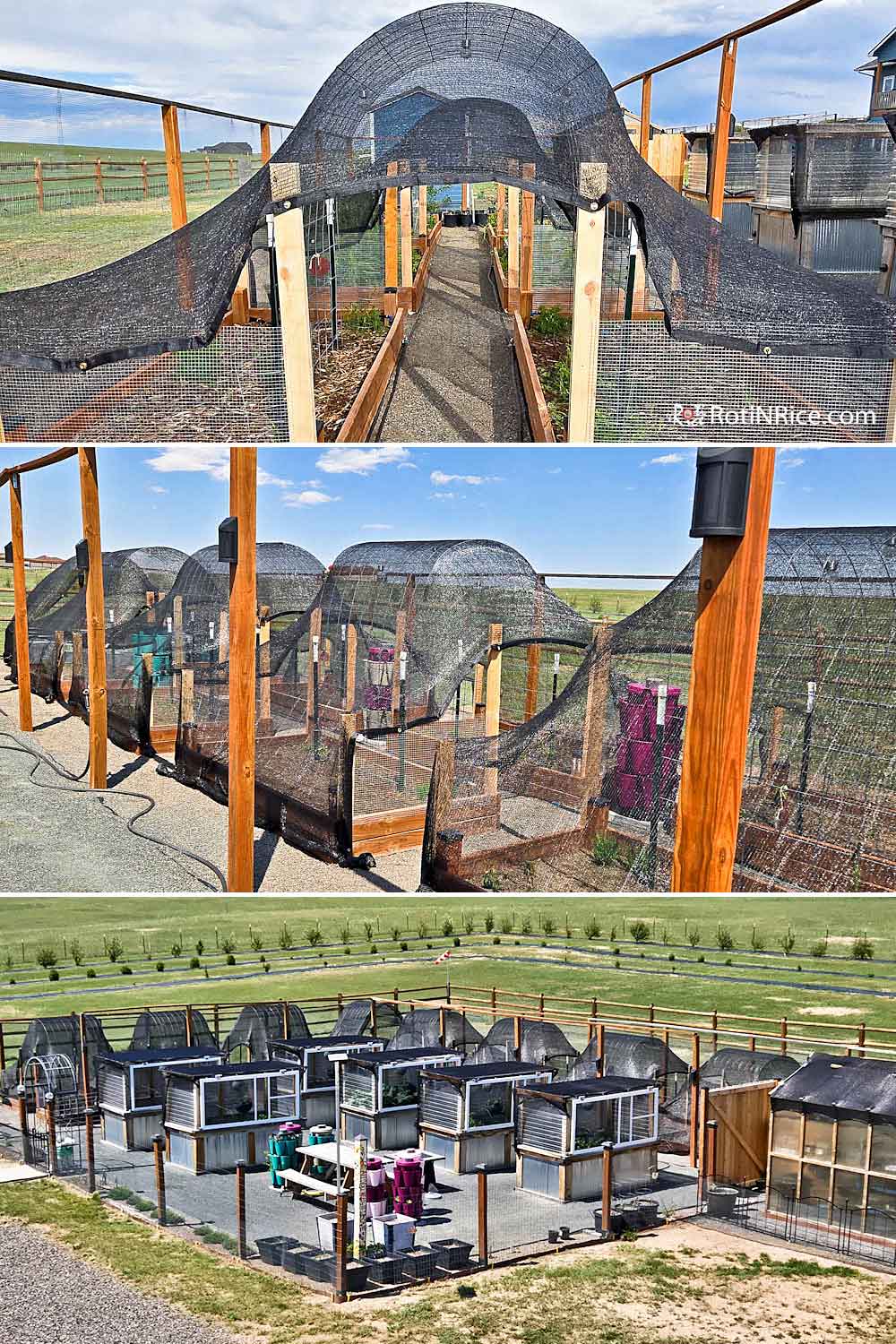
The hail cloth over the raised bed garden was no longer usable, and so we removed it. In its place, we installed cattle panel arches over each pair of boxes. Then, we stretched shade cloth over the cattle panel as a hail and sun protection. These structures formed little tents of protection that were less likely to catch the wind in a violent storm. It was a quick fix so that we can get the vegetable garden started again, even though it was already late in the growing season. We knew this was only a temporary measure until we could come up with a more permanent solution.
Garden Recovery After Hailstorms – A More Permanent Solution For Hail Protection
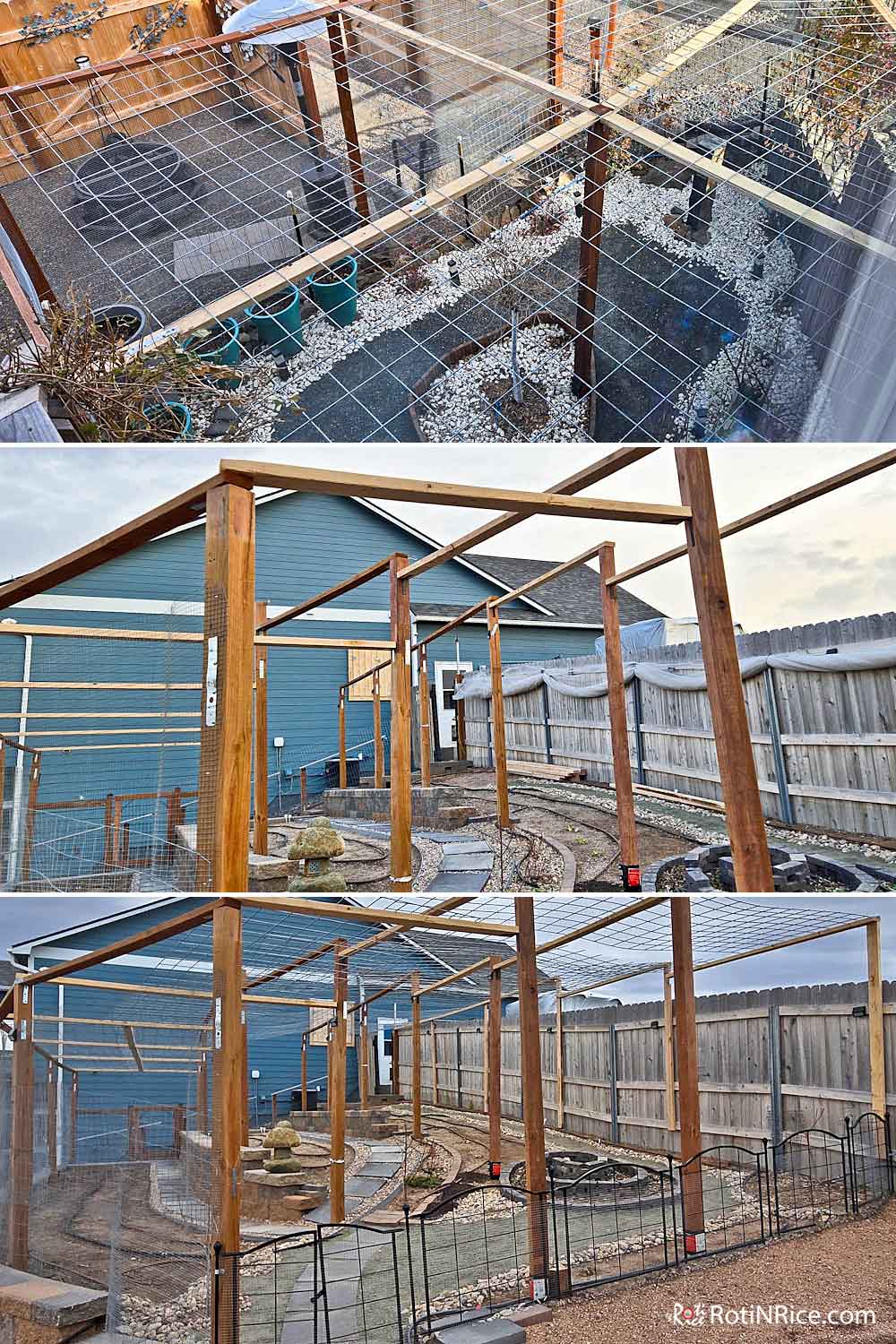
As summer stretched into fall, we started planning for a more permanent solution for hail protection. Hail cloth cannot withstand huge amounts of hail. The material can tear under the weight of the hailstones. Our plan was to cover all our planting areas with ½ inch square steel mesh supported by stretches of cattle panel on top of wooden frames. We used 4×4 posts anchored into the ground. We also added more wooden beams to the existing frames to form squares and rectangles onto which the cattle panels rested.
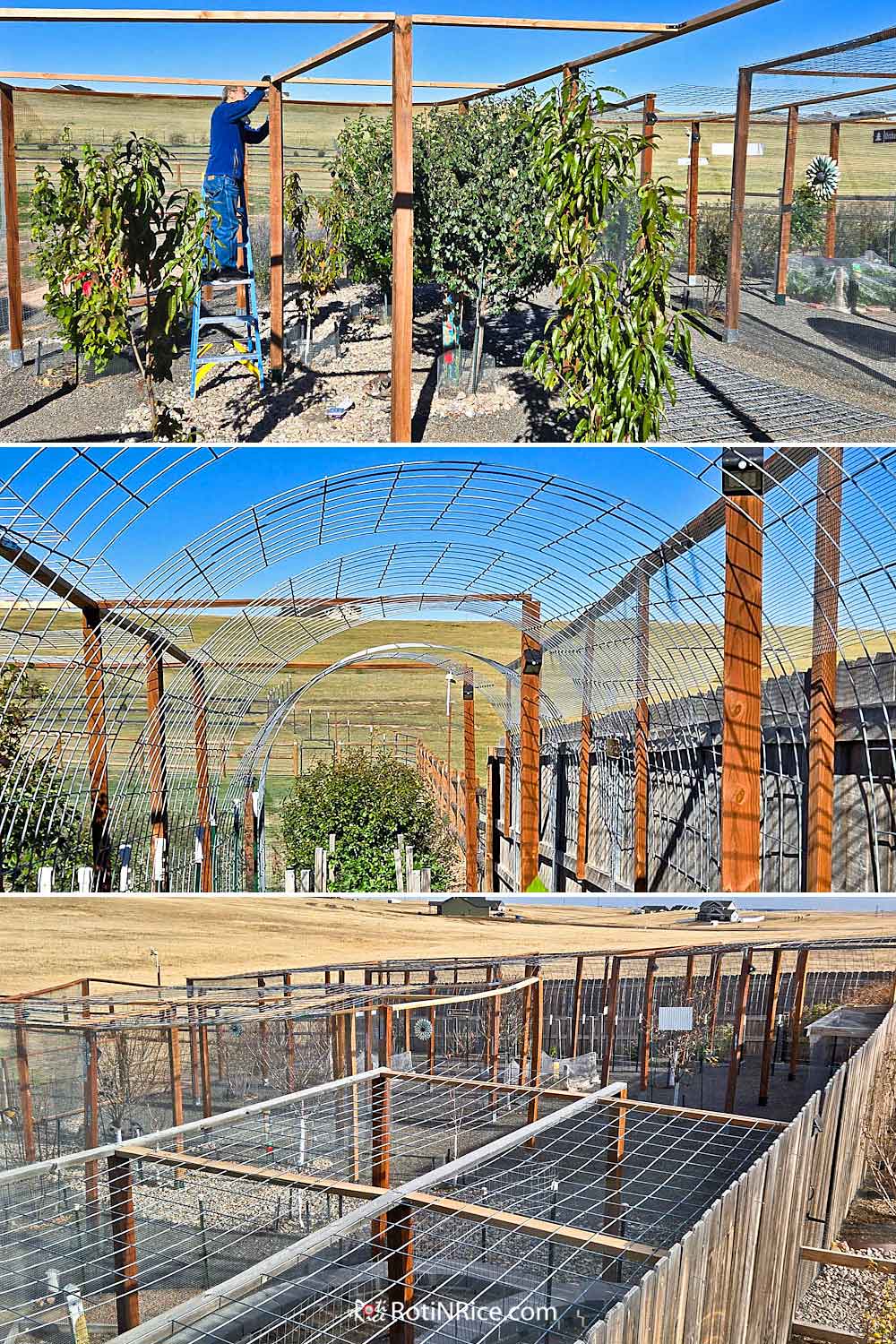
In the fall of 2025, we worked in the orchard, followed by the west terrace garden, and then the Japanese garden. In all three areas, we sunk in more 4×4 posts to provide support for the extended wooden frame canopy. The steel mesh itself would not be added until the spring of 2026.
Damage To The Stand-Alone Greenhouse
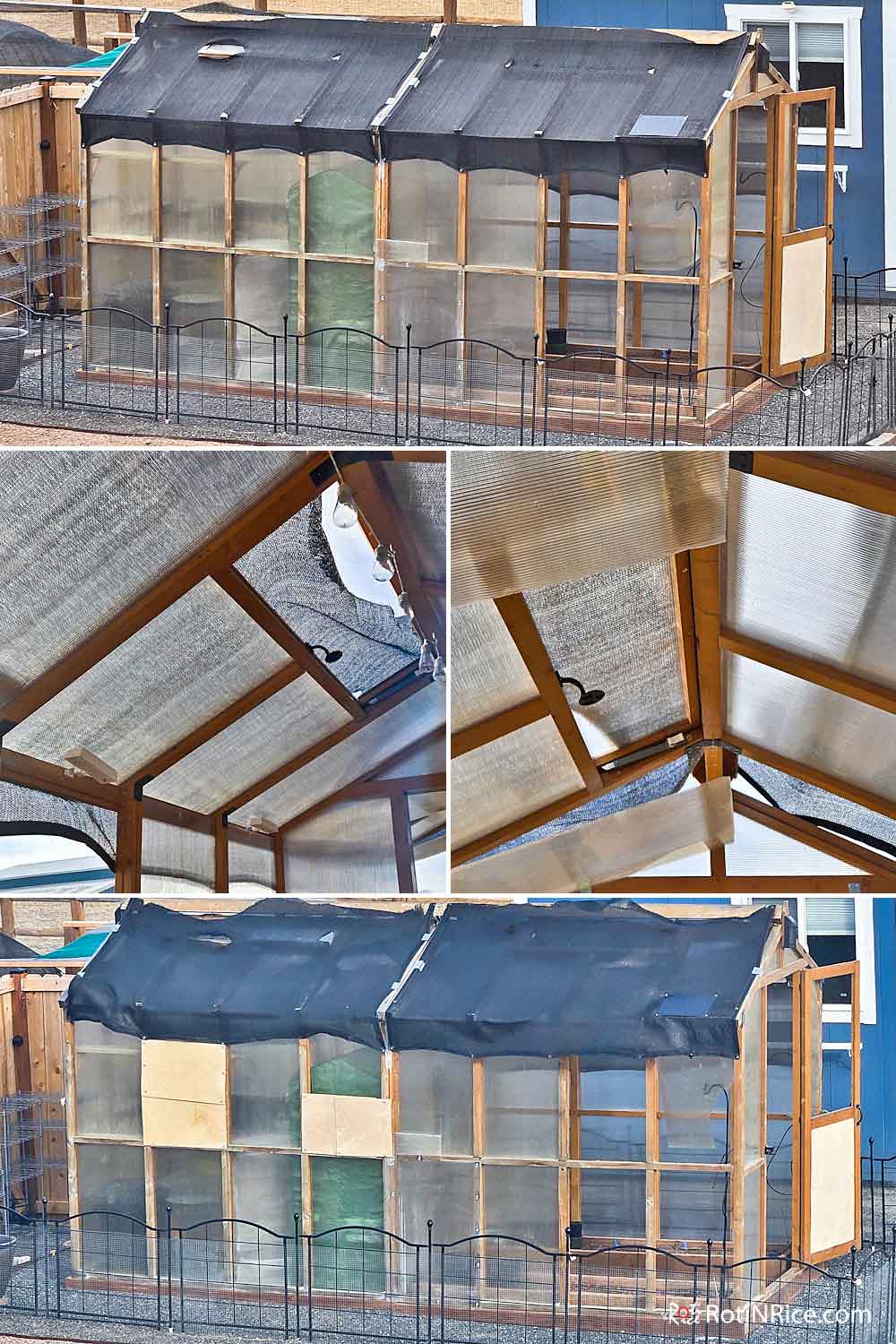
Our Stand-Alone Greenhouse adjacent to the raised bed garden was not spared. The polycarbonate panels took a lot of impact damage. Some of the panels were even blown out by the strong winds, and the black shade cloth was in tatters. In between storms, we patched some of the earlier blow-outs with plywood. Subsequent storms took out even more roof and wall panels.
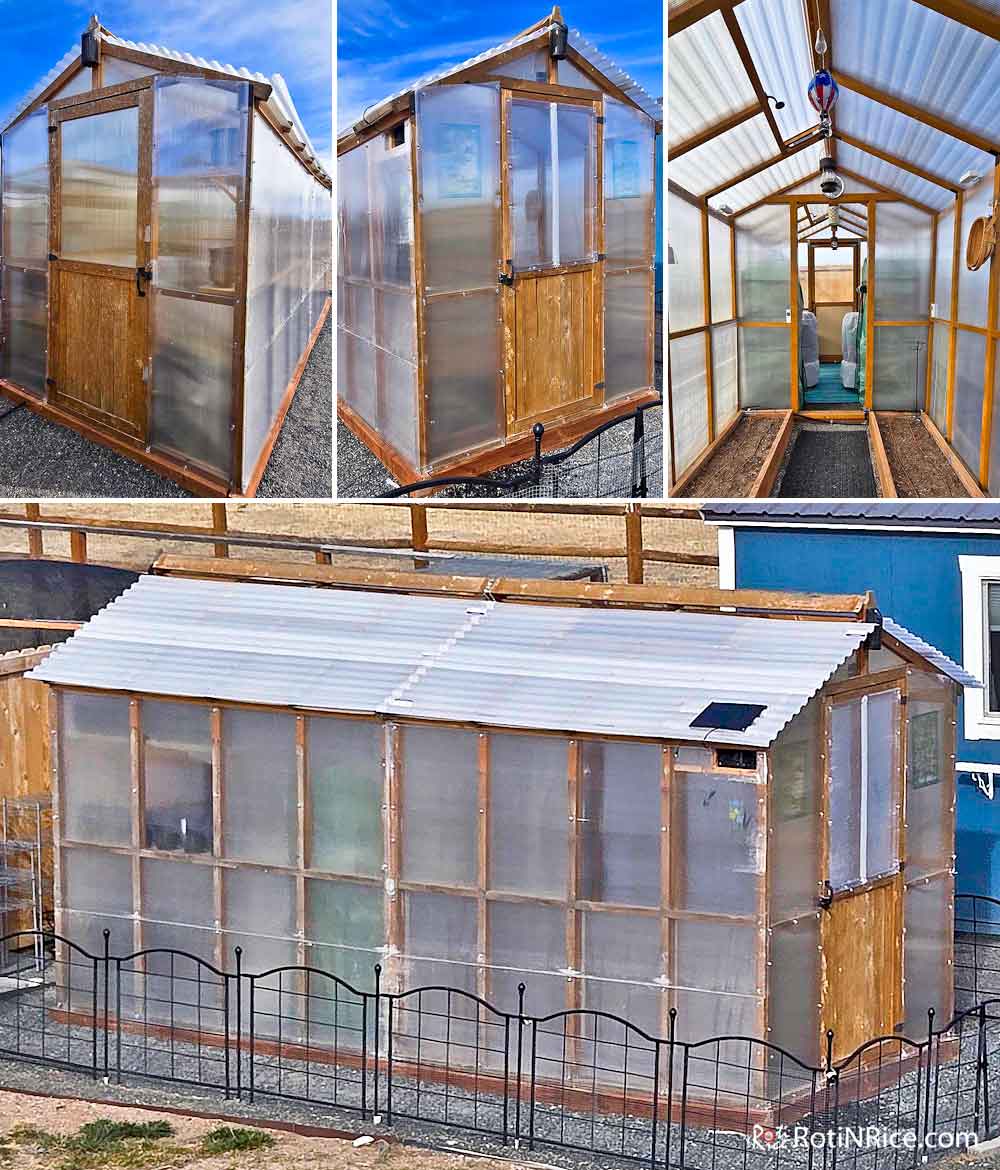
The permanent fix was to get larger and thicker polycarbonate sheets. These sheets were screwed horizontally on the outside of the greenhouse frame to give it better rigidity. Similarly, tough corrugated polycarbonate roof sheets were installed over the damaged roof. The new roof panels also acted as a shade layer, cutting of 20% of the sunlight into the greenhouse.
Similar Tools Used in This Garden Recovery After Hailstorms Post
This post contains affiliate links. Please read my disclosure policy here.
Dewalt Atomic 20V MAX* Circular Saw, 4-1/2-Inch
Black & Decker Corded Drill, 5.5-Amp, 3/8-Inch
Makita XFD12Z 18V LXT Lithium-Ion Brushless Cordless 1/2″ Driver-Drill
Metal Roofing Screws: (250) 10 x 1″ Galvanized Hex Head Sheet Metal Roof Screw.
48″ x 100′ 1/2inch Hardware Cloth Galvanized Welded Cage Wire, 19 Gauge
Garden Recovery After Hailstorms Mode in 2025
All in all, the 2025 growing season was largely consumed by garden recovery projects. We did manage to get some produce for that year but it wasn’t much. We worked hard all fall of 2025 and early spring of 2026 in the hope that the 2026 growing season will be a better one.
Please check back soon as we will be showing you the continuation of our hail protection project into the spring and summer of 2026.


Leave a Reply